
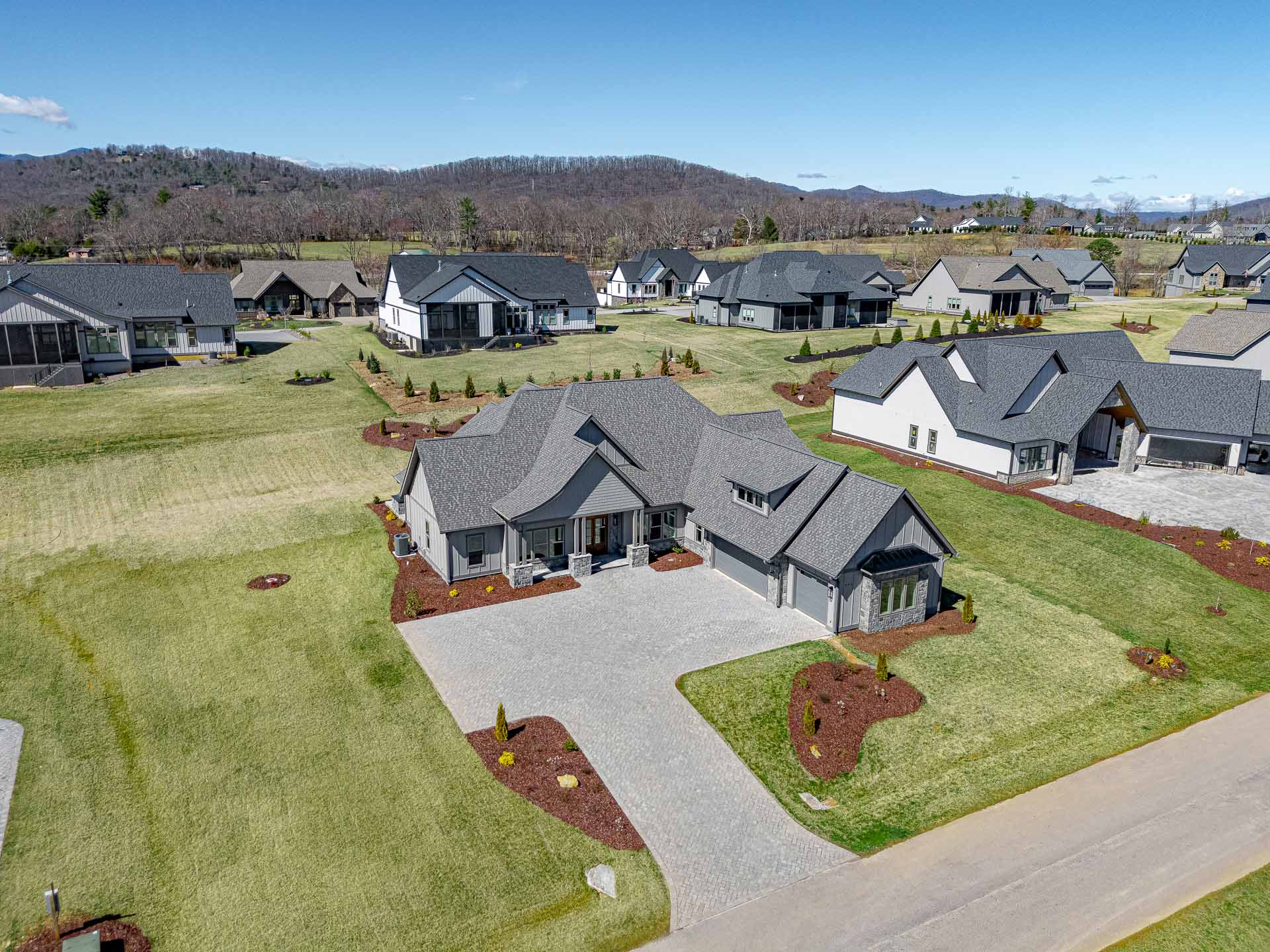
Hurricane Helene rewrote the risk conversation for home buyers in the North Carolina mountains. The state budget office’s September 2025 federal funding request reported that Helene damaged more than 74,000 homes in Western North Carolina, and that as of September 9, 2025 only 3.9% of flood-damaged households carried flood-specific insurance. That gap, tens of thousands of damaged homes and very few flood policies, is the most useful lesson a buyer can take into a purchase today. Insurance is not a form you complete after you go under contract. It is due-diligence work you finish while you can still walk away.
What a standard homeowners policy will not cover
Start with the exclusions, because they map almost perfectly onto mountain hazards. The North Carolina Department of Insurance notes that most homeowners policies in the state do not cover floods, earthquakes, mudslides, mudflows, or landslides. In a flat suburban market those exclusions read like a footnote. In steep terrain with creeks, cut slopes, and heavy storm rainfall, they are the main event. Any insurance plan for a WNC home has to answer two questions separately. What does the homeowners policy cover, and what covers everything it excludes?
A property-by-property checklist for your due-diligence window
Work through these steps for the specific property, not for the neighborhood in general. Two homes on the same street can carry very different water risk depending on elevation, grading, and drainage.
1. Read the seller disclosure closely
North Carolina revised its Residential Property and Owners’ Association Disclosure Statement, required for use beginning July 1, 2024, and per the North Carolina Real Estate Commission the updated form added more detailed questions about flooding and related property history. Read every water-related answer on that form, and treat anything vague as a question to chase down rather than a box that was checked.
2. Pull the FEMA flood map yourself, then look past the zone letter
Whether a property lies in a flood zone is always a material fact, and NCREC says a broker must make reasonable efforts to discover and disclose it. Verify it yourself anyway. Then keep the zone letter in perspective. The National Flood Insurance Program says every flood zone carries some risk, and one in three flood claims comes from low- and moderate-risk zones. If your loan is federally backed and the home sits in a high-risk A or V zone, flood insurance generally stops being a choice and becomes a lender requirement.
3. Ask about past losses and walk the site with an independent inspector
The disclosure gives you the seller’s account of the property’s history. Pair it with your own eyes and an independent site inspection. How does water move across the lot in a hard rain? Where does the driveway drain? How close is the nearest creek, and what does the slope above the house look like? An inspector who works in mountain terrain will read grading and drainage in ways a generic checklist inspection does not, and that reading feeds directly into your insurance decisions.
4. Get a real homeowners quote before your deadline
Do not budget from a friend’s premium or a statewide average. North Carolina’s negotiated homeowners base-rate settlement added an average 7.5% on June 1, 2025 and another 7.5% on June 1, 2026, according to the Department of Insurance, with territory-level increases capped at 35%. The same settlement bars any new Rate Bureau request before June 1, 2027, so the current structure is what you are pricing against. Because the increases vary by territory, the only number that matters is a quote on the actual address you are buying.
5. Price flood coverage even outside the high-risk zones
Given how many claims come from lower-risk zones, price a flood policy for any WNC property near water or below a slope, whatever the map says. Timing works in a buyer’s favor here. Per the NFIP, coverage normally begins 30 days after purchase, but there is no waiting period when the policy is bought while making, increasing, extending, or renewing a mortgage. Buying flood coverage as part of your loan closing means protection can begin when your ownership does, with no exposed month at the start.
6. Check the replacement-cost number, not the market price
The dwelling limit on your policy, Coverage A, normally reflects the cost to rebuild the home, excluding land, per the Department of Insurance. The department advises carrying insurance equal to at least 80% of full replacement cost, and falling below that level may reduce what the insurer pays on a claim. Rebuild cost in the mountains is not the same as market value, so ask the insurer how the replacement estimate was built and sanity-check it against what construction actually costs in your county.
Sequence it against your due-diligence deadline
Everything above has to land before your due-diligence deadline, because that is the window in which you can leave the contract over what you learn. Order the disclosure review and the flood-map pull first, since they cost nothing. Book the site inspection early, since inspectors’ calendars fill fast. Request homeowners and flood quotes in the first days, since underwriting questions can take a week to resolve. Then bring the answers together with your lender’s insurance requirements before the deadline, while the decision is still yours to make.
A last word on mindset. The point of this checklist is not to scare you out of the mountains. It is to make the risk visible, priced, and covered before you commit, which is exactly what most of the households damaged by Helene never had the chance to do with the information buyers have now.
Buying in Western North Carolina rewards buyers who do this homework, and it helps to start with a home where the site work and drainage were engineered from day one. Big Hills Homes WNC builds new homes across WNC communities, and our team can walk you through the lot, the grading, and the community details that feed your insurance review. Start your search at Big Hills Homes WNC.